It often starts with a notification. A news alert flashes across a screen, a phone buzzes in the dead of night, or a message arrives from a partner on the ground. Somewhere in the world, the earth has violently shaken, the waters have surged, or conflict has erupted. For millions, life has irrevocably changed in an instant. For humanitarian organisations, the clock starts ticking.
In the world of emergency aid, the period immediately following a catastrophe is known as the "golden hours"—a critical 72-hour window where the actions taken can mean the difference between life and death for the largest number of people. This is not a time for hesitation; it is a time for precision, expertise, and rapid mobilisation. At the Australian Relief Organisation, this is the moment when years of planning, building networks, and honing logistical strategies are put into immediate, life-saving action. It’s an intense, coordinated race against time that unfolds far from the public eye. This is a look inside that race—a glimpse into the complex logistical ballet that defines the first 72 hours of a disaster response.

⏰ The Clock Starts Now: Why the First 72 Hours are So Critical
When a disaster strikes, the established systems that support daily life—power grids, communication lines, roads, hospitals, and water supplies—are often the first casualties. In this vacuum of infrastructure, a secondary, silent crisis begins to unfold. Without immediate intervention, the initial disaster is compounded by dehydration, starvation, disease, and exposure.
The 72-hour timeframe is based on the stark realities of human survival. A person can typically survive for about three days without water, and the risk of life-threatening infections from untreated injuries or contaminated sources skyrockets. People trapped in rubble have the highest chance of being found alive within this window. It is the period where shock and chaos are at their peak, and the need for external assistance is most acute.
The primary objectives during this time are clear and uncompromising:
Preserve Life: Provide immediate medical attention, search and rescue support, and establish basic safety.
Meet Basic Human Needs: Distribute clean water, emergency food, and temporary shelter.
Assess the Situation: Gather accurate information to inform the wider, longer-term relief effort.
Every decision, from which supplies to source to which road to take, is weighed against the ticking clock. It is a high-stakes environment where efficiency is measured in lives saved.
Phase 1 (Hours 0-12): Assessment and Mobilisation
The moment a disaster is confirmed, a wave of activity is unleashed. This initial phase is not about moving supplies just yet; it's about moving information and activating the human network that will underpin the entire response.
Gathering Intelligence: The Nerve Centre of the Operation
Before a single aid box can be packed, we need to know what’s happening. This is a process of rapid, multi-source intelligence gathering:
On-the-Ground Partners: ARO maintains a global network of trusted local partners and community leaders. These are our eyes and ears. An immediate line of communication is opened to get firsthand accounts of the most affected areas, the condition of local infrastructure, and the most urgent needs. Their knowledge of the local language, culture, and geography is invaluable.
Official Channels: We monitor reports from international bodies like the United Nations (OCHA), the Red Cross and Red Crescent Movement, and the national government of the affected country. This provides a macro-level view of the disaster's scale and the officially coordinated response.
Needs Analysis: Based on the type of disaster, we can anticipate certain needs. For an earthquake, the priority might be search and rescue and medical teams. For a flood, it’s clean water and sanitation kits to prevent cholera. For a complex crisis, like the ongoing efforts for healing Gaza, the needs are multifaceted, encompassing food, shelter, medical aid, and trauma support.
This intelligence forms a constantly evolving mosaic that dictates our strategy. It helps us answer the most important questions: Where is the need greatest? What supplies are required most urgently? And how can we get them there?
Activating the Network: A Global Team Springs to Action
With a preliminary assessment in hand, mobilisation begins. This involves activating a pre-vetted and prepared network of people and resources. The ARO team coordinates with logistics experts, field staff, and volunteers. Simultaneously, emergency appeals are launched. This allows the global community to become part of the response, providing the critical funds needed to procure and deliver aid. This well-practiced mechanism allows for swift action, whether responding to the devastating earthquakes in Turkey and Syria or the floods in Pakistan.
Phase 2 (Hours 12-48): The Race for Procurement and Deployment
This is where the physical logistics kick into high gear. The mission is to get the right supplies to the right people as quickly as humanly possible, which often involves navigating a landscape of immense challenges.
? Sourcing Life-Saving Supplies: The Local-First Approach
While it might seem intuitive to ship supplies from Australia, it's often not the most effective method in a rapid-response scenario. The Australian Relief Organisation prioritises local and regional procurement for several key reasons:
Speed: Purchasing supplies in a neighbouring country or an unaffected part of the same country drastically cuts down on transportation time compared to international air or sea freight.
Cost-Effectiveness: It eliminates exorbitant international shipping costs, allowing donor funds to be stretched further to help more people.
Economic Support: Procuring goods locally injects vital cash into the regional economy at a time when it's most vulnerable. It supports local suppliers and small businesses, preventing the secondary economic collapse that can follow a disaster.
Cultural Appropriateness: Sourcing items like food locally ensures they are familiar and culturally appropriate for the recipients.
The procurement list is tailored to the intelligence gathered in Phase 1. Core items almost always include:
Emergency Food Packs: High-energy biscuits, canned goods, flour, rice, and oil.
Shelter Kits: Tents, tarpaulins, rope, and tools to create temporary homes.
Non-Food Items (NFIs): Blankets, cooking sets, hygiene kits (soap, toothbrushes, sanitary items), and warm clothing.
Water, Sanitation, and Hygiene (WASH): Water purification tablets, jerrycans, and soap are among the most critical supplies to prevent the outbreak of diseases like cholera.
✈️ Navigating Logistical Nightmares
Getting these supplies from the warehouse to the distribution point is the single greatest challenge of any disaster response. The landscape is often transformed. Roads are destroyed, bridges have collapsed, and airports may be damaged or overwhelmed. ARO’s logistics teams and partners are experts in creative problem-solving. This can mean:
Finding Alternative Routes: Using smaller, less-damaged roads, or even employing boats or animal transport to reach cut-off communities.
Clearing Bureaucratic Hurdles: Working with national authorities to get customs clearances and waivers for humanitarian aid is a process that can be fraught with delays.
Ensuring Security: In conflict zones or areas with civil unrest, ensuring the safety of aid workers and the security of supply convoys is paramount, requiring careful planning and coordination.
Every delay is a potential threat to life, so the pressure to overcome these obstacles is immense.

Phase 3 (Hours 48-72): First Point of Contact and Distribution
This is the culmination of the previous 48 hours of intense, behind-the-scenes work. It’s the moment the aid physically reaches the hands of those who need it most.
❤️ Setting Up a Lifeline: The First Distribution
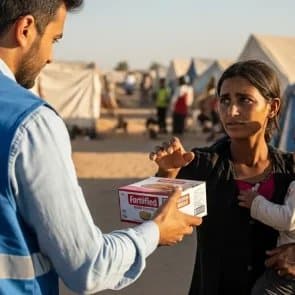
The arrival of the first aid convoy is a powerful symbol of hope. It signals to a community that they have not been forgotten. Distribution points are quickly established in safe, accessible locations. This is done in close coordination with community leaders to ensure the process is orderly, fair, and reaches the intended recipients. The first distribution is a chaotic but essential affair, providing the immediate relief that allows people to survive the next few days. It's about restoring a semblance of dignity and providing the tools for survival.
Focusing on the Most Vulnerable
In a large-scale disaster, it's impossible to help everyone at once. Therefore, aid distribution is guided by the humanitarian principle of impartiality—aid is given based on need alone. Priority is always given to those who are most vulnerable:
Families with young children
The elderly and people with disabilities
Unaccompanied minors
Pregnant or nursing mothers
Those who have sustained injuries
This targeted approach ensures that our resources have the greatest possible impact in preserving life. This foundational work also helps identify individuals who may need longer-term support, such as specialised medical care. Once the initial emergency phase passes, these networks can be used to deliver other critical health interventions, such as providing a cure for cataracts to restore sight and independence.
Beyond 72 Hours: Paving the Road to Recovery
The first 72 hours are a sprint for survival. But the work of ARO doesn't end there. This initial response is the critical first step on the long road to recovery. The information gathered, the relationships built with the community, and the trust established during this period form the bedrock of the next phase.
The focus shifts from emergency relief to sustainable recovery. Temporary shelters eventually give way to rebuilding homes. Emergency water distribution evolves into long-term projects, like the installation of deep-water wells through a charity clean water program. Food aid transitions to supporting local farmers to replant their fields. This long-term commitment is how a community moves from surviving to thriving.
The intensity, complexity, and life-saving importance of the first 72 hours cannot be overstated. It is a remarkable testament to human ingenuity, global solidarity, and unwavering compassion. It is a logistical feat performed under the most extreme pressure, driven by the simple belief that every life is worth saving. Through meticulous planning and the unwavering support of a global community, the Australian Relief Organisation can continue to be a beacon of hope in the darkest of hours.