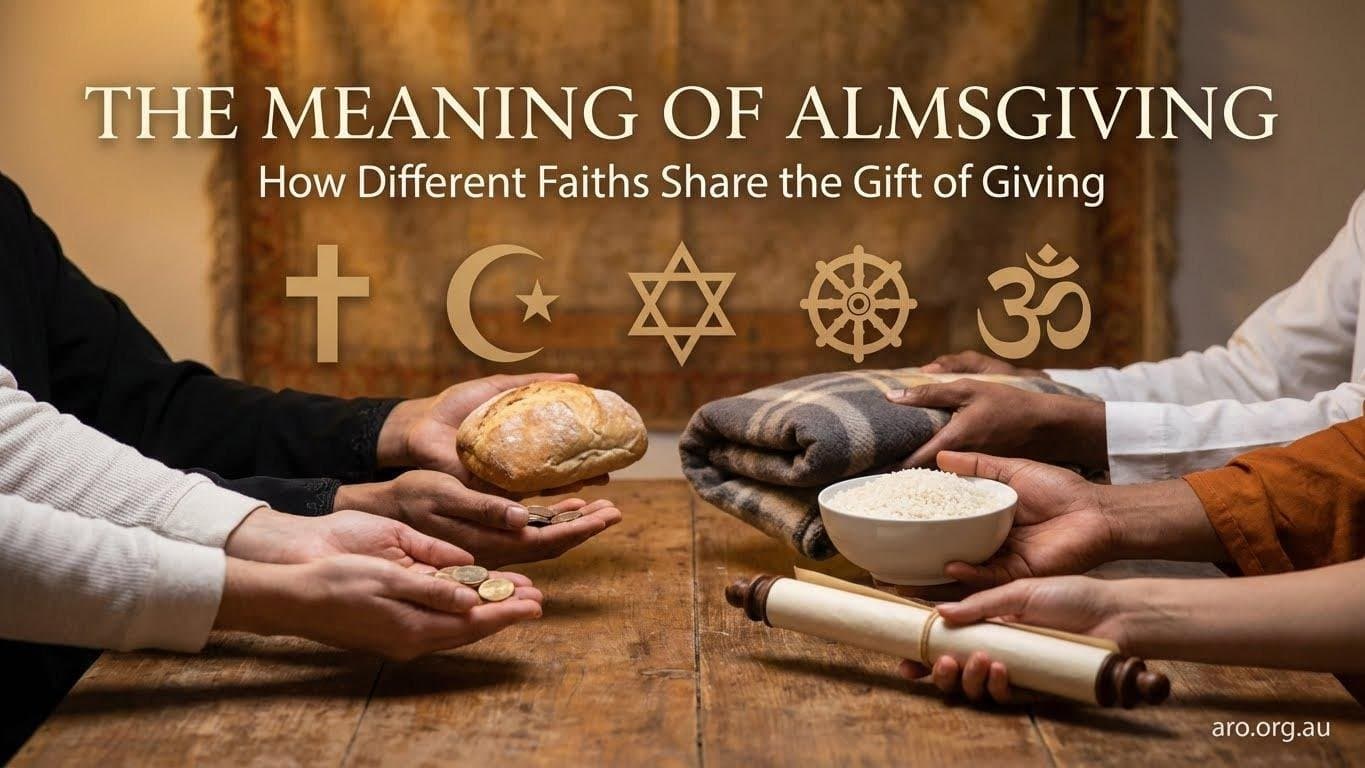
Across the world, in nearly every faith tradition, there's a concept that translates roughly to 'giving to those in need.' Whether it’s called Tzedakah in Judaism, Sadaqah in Islam, or Dana in Buddhism, the principle is the same. Yet, the meaning of this giving goes much deeper than the mere exchange of money or goods.
We often use the word "charity," but faith traditions elevate the act to almsgiving. This distinction is key: Almsgiving is not merely a kind gesture; it is a spiritual act tied to compassion, social justice, and a profound connection to the divine. It is an intentional, often ritualized, practice designed to shape the giver’s character as much as it supports the receiver.
Understanding these ancient traditions helps us see that generosity is not just a seasonal trend or a local practice—it is a universal human value, codified into the moral and theological fabric of civilizations. In this deep dive, you’ll learn how five major world faiths define, approach, and practice giving, revealing why they all consider the act of helping others to be sacred.

What is Almsgiving? A Definition Across Faiths
Simply put, almsgiving is the act of giving money, food, or assistance to those in need, motivated by compassion and spiritual belief.
Civilizations have practiced almsgiving for thousands of years. It became essential not only for supporting the poor but for maintaining social order and reflecting a society's highest moral ideals.
Almsgiving vs. Charity: The Spiritual Difference
The key difference between "charity" and "almsgiving" lies in the spiritual weight they carry:
Charity is a secular term for goodwill and kindness. It is optional and based on personal choice.
Almsgiving is a religious imperative. Faiths often view it as a sacred duty or a means of fulfilling a covenant with the Divine. It’s not just about helping; it's about purifying oneself and deepening one's connection to faith.
Common Threads Across Faiths:
Moral Obligation: Giving is seen as a mandatory duty, not an option.
Empathy and Humility: The practice builds compassion and breaks down the ego of the giver.
Justice: Giving often ties into correcting systemic injustice and inequality.
Almsgiving in Christianity: Biblical Foundations & Modern Practice
The concept of almsgiving forms a cornerstone of Christian ethics, with Jesus setting a profound example of selfless care for the poor throughout the New Testament.
The Call to Mercy and Action
The Christian understanding of almsgiving is rooted in the belief that all possessions are ultimately God’s and that humans are simply stewards of those resources.
Imitating Christ: Christians see almsgiving as imitating Christ's example of compassion and sacrifice. The act of giving is a direct response to God's grace.
The Widow's Mite: Jesus praised the poor widow who gave her last two small coins, emphasizing that the value of the gift is measured by the degree of sacrifice, not the sheer amount given (Mark 12:41-44).
Caring for Others: Christ makes care for the vulnerable central to salvation, teaching: "Truly I tell you, whatever you did for one of the least of these brothers and sisters of mine, you did for me." (Matthew 25:40).
Modern Christian Practice
Tithing: The practice of giving 10% of one's income to the church or charitable organizations.
Acts of Mercy: Supporting causes that provide food, shelter, or healthcare.
Lenten Sacrifice: Many Christians intentionally practice sacrifice (fasting) and increase their giving (almsgiving) during the Lenten season to focus on spiritual growth.
Sadaqah in Islam: Voluntary Charity & Spiritual Reward
In Islam, charity is a non-negotiable part of daily life and worship. While Islam is globally known for Zakat, the obligatory form of giving, the concept of Sadaqah (voluntary charity) carries immense spiritual significance.
Zakat vs. Sadaqah: Two Forms of Giving
It is vital to distinguish between the two primary forms of Islamic giving:
Zakat: This is one of the Five Pillars of Islam. It is an obligatory annual tithe (2.5%) on accumulated wealth, paid to specific, qualified categories of recipients.
Sadaqah: This is a voluntary charity given out of compassion and faith. It can be given at any time, in any amount, and encompasses financial gifts, food, time, and even a simple kind word or smile.
Why Sadaqah Matters
Islamic teachings emphasize the continuous nature of giving. The Prophet Muhammad (peace be upon him) taught that “The best charity is that given when one is in need themselves,” highlighting the sacrifice involved.
Purification and Reward: Giving is an act of worship (Ibadah) that purifies the wealth and the heart of the giver, accumulating merit (Hasanaat) for the Afterlife.
Community Building: Sadaqah strengthens the bonds of the Ummah (global Muslim community) and ensures wealth flows to the needy.
Organisations like ARO rely heavily on these acts of Sadaqah to support global projects, especially during Ramadan and the celebrations of Eid al-Fitr and Eid al-Adha.
Tzedakah in Judaism: Justice Through Giving
In Judaism, the concept of giving is enshrined in the word Tzedakah (pronounced tz-dá-kah). While frequently translated as "charity," the literal meaning is: "justice" or "righteousness." Judaism views providing for those in need not merely as an optional act of kindness, but as a moral obligation and a debt of justice.
In the Jewish worldview:
A Right and a Duty: The poor have a right to receive help, and the wealthy have a corresponding duty to give. Tzedakah is an act of correcting social and economic imbalance mandated by the tradition.
Maimonides’ Levels: The philosopher Maimonides outlined Eight Levels of Tzedakah. The highest level is helping someone become self-sufficient (e.g., providing a loan, a business, or employment) so they no longer rely on charity, emphasizing dignity and independence over mere handouts.
The concept of Tikkun Olam ("repairing the world") drives modern Jewish charitable practice, which includes supporting community institutions, addressing poverty, and creating systemic solutions that restore equity.
Dana in Buddhism & Hinduism: Generosity as Spiritual Practice
The traditions originating in India—Buddhism and Hinduism—share a foundational concept known as Dana, meaning "generosity" or "giving." In both faiths, Dana is considered one of the highest virtues and a prerequisite for spiritual advancement.
Buddhist Perspective: Dana and Ego
In Buddhism, Dana is one of the three pillars of practice. The primary motivation for Dana is the immediate act of reducing attachment and ego. Giving purely out of compassion, without any expectation of material or spiritual return, is the ideal practice as it breaks the cycle of craving and suffering.
Hindu Perspective: Daan and Karma
In Hinduism, the similar concept of Daan is considered a sacred duty (dharma). Acts of generosity are tied directly to spiritual purification and advancement on the path to liberation (Moksha). Giving to those in need, to priests (gurus), or during religious rituals is believed to generate good karma (positive consequences).
In both traditions, giving breaks down the illusion of separation between self and others. It purifies the mind and spirit, recognizing that the well-being of the community is intrinsically tied to one's own spiritual progress.
Comparison Summary: A Cross-Faith Look at Giving
To summarize the diverse practices and motivations:
Tradition | Main Term | Primary Motivation | Nature |
Christianity | Almsgiving / Tithe | Act of Mercy; Imitating Christ | Obligatory (Tithing); Voluntary (Almsgiving) |
Islam | Sadaqah / Zakat | Fulfilling Duty (Zakat); Seeking Spiritual Reward (Sadaqah) | Obligatory (Zakat); Voluntary (Sadaqah) |
Judaism | Tzedakah | Act of Justice and Restoration of Social Imbalance | Obligatory (Duty of Justice) |
Buddhism | Dana | Reducing Attachment and Ego; Accumulating Merit | Voluntary; Essential for Monastics |
Hinduism | Daan | Fulfilling Duty (Dharma); Generating Good Karma | Voluntary; Linked to Rituals |
The Shared Purpose: Why All Faiths Emphasize Giving
Despite the different terms and theological frameworks, all these traditions arrive at the same conclusion: caring for those in need is sacred.
Universal Common Threads:
Transformation of the Giver: Giving is recognized as a spiritual practice that transforms the giver as much as it supports the receiver. It builds compassion, empathy, and humility.
Addressing Suffering: All faiths confront the reality of human suffering and inequality, offering a spiritual and practical mechanism to alleviate it.
Interdependence: Giving reinforces community bonds, teaching that humans are fundamentally dependent on one another for survival and prosperity.
Connection to the Divine: The act reflects God's (or the Universe's) compassion and justice.
Understanding these traditions shows us that generosity is not just one religion's value; it is a universal, intrinsic human value, codified across millennia.
How to Practice Almsgiving in Your Life
Regardless of your personal faith, the ancient principles of almsgiving offer profound guidance on how to give more meaningfully.
1. Examine Your Motivation
The most powerful gifts stem from genuine compassion (niyyah). Are you giving to genuinely help, or merely to feel good about yourself? The best giving is discreet, heartfelt, and aimed solely at the benefit of the recipient.
2. Give Consistently, Not Just Conveniently
Integrate giving into your routine. Build it into your monthly or weekly budget. Small, consistent gifts matter more than large, sporadic ones because they build the habit of generosity.
3. Give What You Can, and Beyond Money
Financial Giving: Give from what you have, even if it feels small. Intention and sacrifice are key.
Giving Time and Skill: Time and expertise are invaluable forms of giving. Volunteering, mentoring, and simple acts of kindness all count as profound almsgiving.
4. Know Your Impact
Support organizations that align with your values and research where your money goes. Organisations like the ARO work diligently to translate spiritual intention into tangible aid.
Conclusion: The Gift of Shared Responsibility
This comparative journey confirms that whether you call it Almsgiving, Sadaqah, Tzedakah, or Dana, all major faith traditions arrive at the same core value—that caring for those in need is sacred.
In a world that often feels divided, it is remarkable how a single, simple act—the act of giving—serves as the universal language of human interdependence. Almsgiving isn't about being wealthy; it's about recognizing our shared human experience and choosing to help carry each other's burdens.
Ready to explore how you can practice giving in a way that aligns with these universal values? Many organizations, including ARO, work across faith traditions to support those in need globally. Your gift, regardless of its size, becomes part of a global, ancient tradition of compassion and justice.